What Age Should Kids Learn About Bitcoin?
We're parents sharing what we've learned, not financial advisors. Some links may pay a referral. Full disclosure.
My 5-year-old knows that money exists and that you trade it for things. My 10-year-old understands that Bitcoin is digital money with a fixed supply. Neither of them needed a formal lesson. Kids learn about money by watching you use it. Bitcoin is the same way.
There's no single right age to teach kids about Bitcoin. Ages 3-5 should learn that money is finite. Ages 6-9 can grasp scarcity and digital money. Ages 10-12 can understand how Bitcoin actually works (mining, wallets, the 21 million cap1). Ages 13+ are ready for self-custody and real financial stakes.
Ages 3-5: What should kids learn about money first?
This is the foundation. Before a kid can understand Bitcoin, they need to understand that you trade money for things, and that you can run out of it.
At this age, don't mention Bitcoin at all. Focus on:
- Coins and bills are money. You give them to people when you buy things.
- When the money is spent, it's gone until you earn more.
- Some things cost more than other things.
The playing-store game is your best friend here. Set up a pretend shop with snacks and toys, price everything, and give them play money. Let them run out. That's the whole lesson. (Our saving vs. spending activity works great at this age too.)
Ages 6-9: How do you introduce Bitcoin to young kids?
Now they can start understanding that money comes in different forms. Coins in your pocket, numbers on a screen when mom checks her bank app, and (here's the new one) Bitcoin.
Key concepts for this age:
- Saving vs. spending. If you save your allowance for 4 weeks, you can buy something bigger. Delayed gratification, the hardest lesson in all of finance.
- Scarcity. There are only 21 million Bitcoin.1 Nobody can make more. Use the dried beans exercise: 21 beans on the table, that's all there is. What happens when everyone wants one? (Full activity in our scarcity lesson.)
- Digital money is still money. When you see numbers on a screen at the bank, that's real money, just digital. Bitcoin is similar, except it doesn't need a bank.
I introduced Bitcoin to my kid at 7 by showing him my Strike app. “See this number? That's how much Bitcoin we own. Watch what happens to the price over the next week.” He checked it every day. When it went down, he was concerned. When it went up, he was excited. Instant lesson in volatility.
Ages 10-12: How do you explain how Bitcoin actually works?
Now you can get more technical. Kids this age can handle abstract concepts if you ground them in concrete examples.
- The ledger concept. Bitcoin is a list (ledger) that records who sent what to whom. Thousands of computers keep copies of this list and check each other.2 Nobody can cheat. (Our blockchain explainer walks through this with a notebook analogy.)
- Mining (simplified). Computers compete to solve math puzzles. The winner gets to add the next page to the ledger and earns new Bitcoin as a reward.3 This is how new Bitcoin enters circulation.
- Wallets and keys. Set up a free mobile wallet (Blue Wallet) and send them $5 in Bitcoin. Let them see the transaction arrive. Show them the wallet address (public) and explain that there's a secret key (private) that lets them spend it.
- Why it matters. Governments can print more dollars.4 Bitcoin's current rules cap the supply at 21 million. That's why some people see it as a good place to save money long-term. (Our money printing explainer is a great companion piece.)
Ages 13+: When is a teenager ready for self-custody?
Teenagers can handle the real stuff. This is when you start talking about:
- Self-custody. Give them a wallet with a small amount and let them manage the seed phrase. If they lose it, the Bitcoin is gone. Real stakes, small amount. (Our wallet setup guide covers the handoff process.)
- Volatility and risk. Pull up a chart showing Bitcoin's price drops: -84% in 2014, -83% in 2018, -77% in 2022.5 Ask: “Could you hold through that?”
- Taxes. If they sell Bitcoin at a profit, they owe capital gains tax.6 Yes, even as a teenager. Show them how it works with a real example.
- Scams. If anyone online promises to double their Bitcoin, it's a scam. 100% of the time. Show them real examples of people who lost money to Discord and Twitter scams. (More in our safety guide.)
I think 13-14 is the right age for a kid to own a small amount of Bitcoin in a wallet they control. Maybe $20-50. Enough to care about, not enough to be devastating if they screw up.
What works at every age?
Let them watch you. If you check your Bitcoin balance, show them. If the price drops 20%, talk about how it feels and why you're not panic-selling. If you make a purchase, walk them through the process. Kids learn money habits from observing their parents, not from lectures.7
The biggest mistake I see: parents who wait until their kid is 16 to have “the money talk.” By then, their financial habits are already formed. Start early, keep it casual, build on it over time.
How do I answer my kid's Bitcoin questions?
- “Am I too young to learn about money?” Nope. You started learning when you first asked me to buy you something at the store. That was money in action. We're just going a little deeper now.
- “My friend said Bitcoin is a scam.” Some people think that. Bitcoin has been running since January 2009,8 and the total network is worth over $1 trillion. That doesn't mean it's guaranteed to go up, but it's not a scam. It's a technology that some people think will change how money works.
- “Will Bitcoin make me rich?” Maybe. Or maybe not. That's why we treat it as one part of saving, not the whole thing. The goal is to understand how it works so you can make your own decisions when you're older.
Try this at home
Age-appropriate Bitcoin check-in (5 minutes, all ages). Once a week, check the Bitcoin price together as a family. For young kids (3-7): “Did the number go up or down?” For middle kids (8-12): “How much would $10 of Bitcoin be worth if we bought it last month?” For teens: “Why do you think the price moved this week? What happened in the news?” Same ritual, scaled to their level. Consistency is what makes it stick.
Materials: A phone. Time: 5 minutes/week.
Sources
- Nakamoto, Satoshi. Bitcoin: A Peer-to-Peer Electronic Cash System (2008)
- Bitcoin Wiki, Full Node (distributed ledger verification)
- Bitcoin Wiki, Mining: How New Bitcoin Enters Circulation
- Federal Reserve, “How much U.S. currency is in circulation?”
- Forkast, “Bitcoin Price Falls to More Than Two-Year Low Amid FTX Fallout” (Nov 2022)
- IRS, Frequently Asked Questions on Virtual Currency Transactions
- Whitebread, D. & Bingham, S. (University of Cambridge), “Habit Formation and Learning in Young Children” (2013), summarized by the St. Louis Fed: financial behaviors typically form by age 7.
- BitcoinUptime.org, Bitcoin Network Uptime Tracker (running since January 3, 2009)
This site is created by a Bitcoin advocate and parent. It presents one perspective on money and financial education. Nothing here is financial advice. Bitcoin is volatile and you can lose money. Consult a licensed financial advisor before making investment decisions for your family.
Keep reading
How to Explain Bitcoin to a 10-Year-Old
A tested approach to explaining Bitcoin to your 10-year-old. Start with the problem (money gets weaker), then introduce the fix (a fixed supply).
How to Talk to Your Teenager About Bitcoin
Teenagers are allergic to lectures. Here's how to have a Bitcoin conversation with your teen that doesn't end in eye rolls. Includes a $20 experiment.
Is Bitcoin Safe for Kids?
The network is secure. The price is volatile. Custody is where most people get burned. Here's an honest breakdown of every type of risk, with practical steps to handle each one.
Give your kids the language behind your family treasury
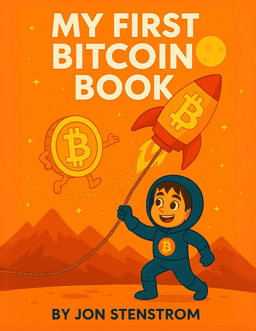
My First Bitcoin Book introduces 26 Bitcoin concepts with fun illustrations, designed for ages 3-8.
Get the Book