Teaching Kids About Saving vs. Spending
My kid got $10 for his birthday and spent it within 20 minutes. Not on anything he actually wanted. Just on the first thing he saw at the store. Two days later, he spotted a toy he'd been eyeing for weeks. It cost $8. Gone.
The best way to teach kids about saving vs. spending is the two-jar system: label one jar “Spend Now” and one “Save For Later,” have them split every dollar they receive (at least 30% to Save), and set a specific savings goal taped to the jar. The physical act of splitting money builds the habit faster than any lecture.
What this lesson covers and who it's for
- Topic: Why saving matters, how to split money between spending and saving
- Ages: 6-9
- Time: 20 minutes for the activity, then ongoing practice
- Materials: 2 jars (or cups), 20 coins (real or play), paper, markers, tape
- Standards alignment: Aligns with CFPB's K-5 financial education milestone of “distinguishing between spending and saving” and Jump$tart's standard on planning and money management.12
How to start the saving conversation (5 minutes)
Start with a question. Don't explain anything yet. Just ask and listen.
- “If I gave you $10 right now, what would you do with it?” Most kids will name something to buy. That's fine. Let them answer.
- “What if there was something you really wanted that cost $20? How would you get it?” This is where saving enters the picture. They'll probably say “wait for more money.” Ask: where does the $10 go while you wait?
- “What's the difference between saving and just not spending?” Saving is active. It has a purpose. You're putting money aside for a specific thing. Not spending is just holding cash with no plan.
How to run the two-jar activity (15 minutes)
- Label one jar “Spend Now” and the other “Save For Later.” Let your kid decorate them with markers if they want. Ownership matters.
- Ask your kid to pick something they want to save for. It should cost more than one week's allowance but less than a month's. Write it down on paper and tape it to the Save jar. (“Pokemon cards: $8” or “art set: $12”)
- Give them 20 coins. Explain the rule: “Every time you get money, you split it. At least 3 out of every 10 go in the Save jar. The rest is your choice.”
- Practice the split right now. Have them divide the 20 coins. Watch where they put them. Ask why.
- Introduce a temptation. Put a small treat on the table (a piece of candy, a sticker) and price it at 5 coins from their Spend jar. Do they buy it? Do they hold? No wrong answer. Just choices with consequences.
- After they decide, count what's in each jar. Ask: “How many more weeks until you reach your savings goal?” Help them do the math.
How to make the saving habit stick
The activity only works if it becomes a habit. Here's how to keep it alive:
- Real allowance, real jars. Move from play coins to actual money. Even $1/week split between two jars teaches the muscle.
- Weekly check-in (2 minutes). Every Sunday, count the Save jar together. How close are they to the goal? Update the number on the paper taped to the jar.
- Celebrate the goal. When they hit their savings target, go buy the thing. The trip to the store is part of the lesson. They earned this. They waited. They chose.
- Then set a new goal. The cycle repeats. Each time, the concept gets more automatic.
If the waiting part is hard for your kid, that's totally normal. Our delayed gratification lesson is designed to build exactly that muscle, and it pairs perfectly with the two-jar system.
What kids learn from saving vs. spending
The key takeaway to reinforce: spending feels good now, but saving gives you something better later. Both are okay. The skill is knowing when to do which.
If your kid struggles with this, that's normal. Adults struggle with it too. The U.S. personal savings rate was just 3.9% in late 2024, near historic lows.3 The goal is the habit of pausing before spending. Perfection comes later, if at all.
How to connect saving to Bitcoin and inflation
Once your kid gets the saving concept, you can layer in a bigger idea: some money is designed for saving. A dollar in a jar loses buying power over time (that's inflation). Bitcoin was built to do the opposite. There's a fixed amount (21 million, ever), so over long periods, each piece tends to buy more, not less.4
You don't need to get into this on day one. But when they ask “why does my saved money buy less stuff next year?”, that's your opening. The why money loses value guide explains it at their level.
How to handle common situations
- If they empty the Save jar early: Don't shame them. Ask: “How did it feel to use that money? Was it worth it? What happens to your goal now?” Let the natural consequence do the teaching.
- If they hoard everything in Save and never spend: Also fine, honestly. But gently remind them that spending isn't bad. The point is making intentional choices, not avoiding all purchases forever.
- If siblings fight about different jar balances: Different people have different goals and different timelines. That's a bonus lesson in itself. Everyone manages their own money their own way.
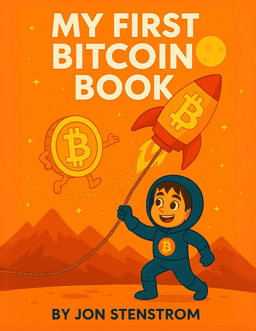
For a complete A-Z introduction to money and Bitcoin concepts, My First Bitcoin Book covers all 26 topics with illustrations kids enjoy, and it pairs well with the two-jar system as supplemental reading.
Sources
- Consumer Financial Protection Bureau, Youth Financial Education Resources
- Jump$tart Coalition for Personal Financial Literacy, National Standards in K-12 Personal Finance Education
- U.S. Bureau of Economic Analysis, Personal Saving Rate
- Nakamoto, Satoshi. Bitcoin: A Peer-to-Peer Electronic Cash System (2008)
- National Endowment for Financial Education, Financial Education Research Projects
- T. Rowe Price, Parents, Kids & Money Survey (annual survey on children's financial habits)
This site is created by a Bitcoin advocate and parent. It presents one perspective on money and financial education. Nothing here is financial advice. Bitcoin is volatile and you can lose money. Consult a licensed financial advisor before making investment decisions for your family.
Keep reading
Teaching Delayed Gratification to Kids
A homeschool-friendly lesson on delayed gratification with two activities: a 5-minute marshmallow-style test and a week-long challenge. Works for ages 5-10.
6 Financial Literacy Activities for Kids
Six hands-on financial literacy activities for kids ages 6-9. Each takes 10-20 minutes and uses stuff you already have: coins, beans, jars, paper, markers.
Financial Literacy Curriculum for Homeschool
A complete, age-sequenced financial literacy curriculum for homeschool families. Four units from money basics to budgeting, with hands-on activities and a weekly schedule.
Build the worldview your treasury needs
My First Bitcoin Book helps kids learn the words behind saving, scarcity, self-custody, and sats.