How to Explain Bitcoin to a Child
Your child does not need a lecture on nodes, mining, or monetary policy. They need one sentence they can repeat without pretending to understand it.
Simple answer: Bitcoin is internet money that no bank or government controls, and nobody can make more than 21 million of it. For younger kids, say it this way: “Bitcoin is special money on the computer. People can send it to each other, and the rules say no one can print extra.”
The 30-second parent script
“Regular money is controlled by banks and governments. They can make more of it, so over time each dollar can buy less. Bitcoin is different. It is money on the internet with rules everyone can check. One rule says there will only ever be 21 million bitcoin. That makes it useful for people who want to save without someone quietly changing the rules.”
Start with the problem your child already understands
Do not start with Bitcoin. Start with a broken-money moment they have seen: candy costing more than it used to, a toy getting more expensive, or a parent saying, “That costs too much now.” Then ask: “Did the candy get better, or did the money get weaker?”
That question gives Bitcoin a reason to exist. If your child needs the full background first, use the inflation explainer or the why money loses value guide before you bring Bitcoin into the conversation.
Use one analogy at a time
Pick the analogy that fits your child. Do not stack all three in one conversation.
- Email for money: Email lets people send messages without the post office. Bitcoin lets people send value without a bank in the middle.
- A fixed box of 21 million pieces: Imagine a game where the box has exactly 21 million pieces and no one can add more. If more people want pieces, they have to earn, trade, or buy from someone else.
- A class notebook everyone checks: Instead of one teacher keeping the only scorebook, the whole class checks the same notebook. If one person lies, everyone else can reject it. That is the basic idea behind the blockchain.
What to skip the first time
Skip private keys, seed phrases, tax treatment, leverage, trading, and “number go up” talk. Those are adult layers. A first conversation should land three ideas: Bitcoin is digital, the supply is fixed, and no single company or government controls the rules.
If your child is around 10 and wants a slightly deeper version, use the 10-year-old Bitcoin explanation. If they just want the basic definition, use what is Bitcoin for kids.
Questions kids usually ask next
- “Can I have some?” Maybe, but start with the idea before the purchase. A child should understand saving, patience, and risk before a parent turns Bitcoin into a reward or allowance system.
- “Can people steal it?” Yes, if adults are careless. That is why Bitcoin families eventually teach wallets, keys, and responsibility. Start with the kid-friendly Bitcoin wallet guide.
- “Why only 21 million?” Because that rule is built into Bitcoin's design. The 21 million Bitcoin explainer breaks it down without turning the conversation into code.
- “Is this like crypto?” Keep it simple: Bitcoin is the first and most important example. Crypto is a broader category, and many crypto projects do not follow Bitcoin's fixed-supply, no-central-owner lesson.
Try this at home: the fixed-supply game
Put 21 beans, coins, or LEGO bricks on the table. Tell your child, “This is all there is. No one can add more.” Now ask them to divide the pieces between family members. What happens when someone wants more? They have to trade, earn, or wait. That is scarcity in a way a child can touch.
After the game, say the line again: Bitcoin is internet money with rules people can check, and one rule says no one can make more than 21 million.
Sources
- Nakamoto, Satoshi. Bitcoin: A Peer-to-Peer Electronic Cash System (2008).
- Bitcoin.org, How Bitcoin Works.
- Federal Reserve, “Why does the Federal Reserve aim for inflation of 2 percent?”
This site is created by a Bitcoin advocate and parent. It presents one perspective on money and financial education. Nothing here is financial advice. Bitcoin is volatile and you can lose money. Consult a licensed financial advisor before making investment decisions for your family.
Keep reading
What Is Bitcoin? Explained for Kids
A plain-English explanation of Bitcoin that you can read to your kids or use as a conversation starter at dinner.
How to Explain Bitcoin to a 10-Year-Old
A tested approach to explaining Bitcoin to your 10-year-old. Start with the problem (money gets weaker), then introduce the fix (a fixed supply).
Bitcoin Lesson Plan for Elementary Students
A ready-to-use lesson plan for teaching elementary-age kids about Bitcoin. Includes discussion questions, a hands-on activity, and a take-home conversation starter.
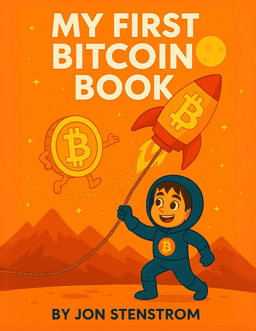
Build the worldview your treasury needs
My First Bitcoin Book helps kids learn the words behind saving, scarcity, self-custody, and sats.