Should I Buy Bitcoin for My Child?
We're parents sharing what we've learned, not financial advisors. Some links may pay a referral. Full disclosure.
You've bought some Bitcoin for yourself. Maybe a lot, maybe a little. Now you're thinking: should I buy some for my kid? The honest answer is: it depends on your time horizon and how you handle custody.
Yes, buying Bitcoin for your child can make sense as a long-term asymmetric bet alongside traditional savings. A small recurring purchase ($10-25/month) over 15-18 years uses dollar-cost averaging and gives your kid exposure to Bitcoin's fixed supply of 21 million coins. But it's not risk-free: Bitcoin has dropped 70-80% multiple times, and custody mistakes can mean permanent loss.
What's the case for buying Bitcoin for a child?
Bitcoin has a fixed supply of 21 million.1 If demand grows over the next 15-20 years (the time horizon most parents are thinking about), each bitcoin becomes more scarce relative to the number of people who want it. That's the core bet.
A small, regular purchase ($10-25/month) over 18 years adds up. You're not trying to time the market. You're giving your kid a head start on owning a scarce asset over a long time horizon.
Michael Saylor put it bluntly: “Give them an endowment that'll last forever. Here's a bitcoin, give it to your grandson's grandson's granddaughter.”7 That's the optimistic case. Not everyone's that bullish, and nobody knows the future. But the logic of buying a scarce asset early in a child's life and letting time compound is hard to argue with.
What are the risks of buying Bitcoin for kids?
Bitcoin's price has dropped 70-80% multiple times. In 2022, it fell from $69,000 to under $16,000.2 If you need the money in 5 years for college, that volatility is a real problem.
Bitcoin isn't insured like a bank account. The FDIC covers up to $250,000 per depositor at insured banks.3 Bitcoin has no such protection. If you lose your keys or get hacked, the money is gone. Custody matters, especially for a minor who can't manage their own exchange account.
And it's worth saying plainly: Bitcoin could fail. The probability feels low after 17+ years, but it's not zero. Don't put in money your family can't afford to lose.
How should parents think about sizing a Bitcoin investment?
- Time horizon matters most. 15+ years? The volatility smooths out historically. Through 2025, every 4-year holding period has ended higher.4 Past performance isn't a guarantee, but the longer the horizon, the better the odds. 3-5 years? Much riskier.
- Size it appropriately. This isn't your kid's college fund (unless you're very comfortable with risk). It's a long-term allocation alongside their other savings. Compare it with a Bitcoin + 529 approach for balance.
- Custody is the real question. Where do you hold it? A hardware wallet is more secure but requires you to manage the keys. An exchange is easier but riskier long-term. Think about what happens if something happens to you.
How do I talk to my kid about Bitcoin savings?
- “Why are you saving Bitcoin for me?” Because I think it might be worth a lot more when you're an adult, and I want to give you a head start. But I could be wrong, which is why we save in other ways too.
- “Can it go to zero?” Technically yes. Probably not, but that's why we don't put all our savings here. You can learn more about the risks in our safety guide.
- “How is this different from a bank account?” A bank account is insured and stable, but your dollars lose buying power every year to inflation.5 Bitcoin is the opposite: volatile in the short run, with a supply cap under its current rules. Check out our inflation explainer to understand why that matters.
Try this at home
The savings jar experiment (ongoing, ages 6+). Set up two jars (or envelopes): one labeled “Dollars” and one labeled “Bitcoin.” Each week, put a dollar in each. Track the Bitcoin price together once a week. After a month, show your kid how the dollar jar stayed the same but the Bitcoin jar's value went up or down. It's a hands-on lesson in volatility and saving.
Materials: Two jars, a few dollars, a phone to check the price. Time: 2 minutes/week.
Sources
- Nakamoto, Satoshi. Bitcoin: A Peer-to-Peer Electronic Cash System (2008)
- Forkast, “Bitcoin Price Falls to More Than Two-Year Low Amid FTX Fallout” (Nov 2022)
- FDIC, Deposit Insurance FAQs
- CaseBitcoin, Bitcoin Historical Returns & CAGR Charts (data source: Messari.io)
- U.S. Bureau of Labor Statistics, CPI Inflation Calculator
- IRS, Frequently Asked Questions on Virtual Currency Transactions
- Saylor, Michael. Interview with Peter Voogd, discussing Bitcoin as a generational endowment
This site is created by a Bitcoin advocate and parent. It presents one perspective on money and financial education. Nothing here is financial advice. Bitcoin is volatile and you can lose money. Consult a licensed financial advisor before making investment decisions for your family.
Keep reading
How to Buy Bitcoin for Your Child
The actual step-by-step for buying Bitcoin for your kid. Which exchange, how much, where to store it, and the tax stuff nobody warns you about.
How to Set Up a Bitcoin Wallet for Your Kid
Exchange wallets, mobile wallets, hardware wallets. Which one to use for your kid's Bitcoin, when to upgrade, and the seed phrase talk every parent needs to have.
How to Give Bitcoin as a Gift to a Child
Four ways to gift Bitcoin to a kid, from buying it in your account to handing them a physical OpenDime. Plus the tax stuff you need to know before you wrap it.
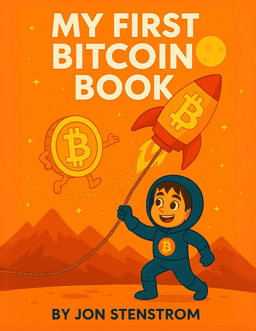
Teach the next steward of your family treasury
My First Bitcoin Book is the easiest way to make Bitcoin language normal at home. 26 concepts, fun illustrations, designed for ages 3-8.
Buy on Amazon