6 Financial Literacy Activities for Kids
I've got 6 financial literacy activities that work for elementary-age kids (ages 6-9). Each one takes 10-20 minutes, uses stuff you already have in your house, and teaches a real concept. No printables, no apps, no buying a kit.
The best financial literacy activities for elementary students use household items (beans, coins, jars) to teach budgeting, needs vs. wants, saving, supply and demand, price awareness, and scarcity through hands-on play. Each activity takes 10-20 minutes and can stand alone or run as a 6-week series.
What these activities cover and who they're for
- Ages: 6-9 (adjust language up or down as needed)
- Time: 10-20 minutes per activity
- Materials: Coins, beans, jars, paper, markers, household items
- Format: Each activity can stand alone or be done as a 6-week series (one per week)
- Standards alignment: Activities align with CFPB youth financial education benchmarks for K-5 students and Jump$tart Coalition standards for elementary learners.12
Activity 1: The needs vs. wants sorting game
Time: 10 minutes. Materials: 10-15 household items (or pictures drawn on index cards).
- Grab items from around the house: a water bottle, a snack, a toy, a jacket, a video game, a toothbrush, a stuffed animal, a pair of socks, a crayon, a blanket.
- Make two zones on the floor or table. Label one “Need” and one “Want.”
- Have your kid sort each item. No right or wrong answers at first. Let them explain their reasoning.
- Discuss the tricky ones. Is a crayon a need or a want? (Depends: for homeschool, probably a need. For drawing dinosaurs at 9pm, probably a want.)
Key takeaway: Most of what we buy is a want, not a need. Knowing the difference is the first step to making smart money choices. The CFPB identifies distinguishing needs from wants as a foundational skill for ages 5-8.1
Activity 2: The bean budget
Time: 15 minutes. Materials: 20 dried beans (or coins), paper, markers.
- Give your kid exactly 20 beans. Explain: “This is all your money for the week.”
- Set up a “store” with 8-10 items. Write each one on a piece of paper with a price: cookie (3 beans), sticker (2 beans), 15 minutes of screen time (5 beans), choosing dinner (4 beans), stay up 10 minutes late (3 beans), etc.
- Let them shop. They can buy whatever they want, but when the beans are gone, they're gone.
- After they finish, ask: “Is there anything you wish you'd bought instead? Anything you regret?”
Key takeaway: Money is limited. Every purchase means you can't buy something else. That's what “budgeting” means in practice.
Activity 3: The two-jar saving split
Time: 10 minutes to set up, then ongoing. Materials: 2 jars (or cups), coins, markers, tape.
- Label one jar “Spend” and the other “Save.”
- Give your kid 10 coins (real pennies, nickels, or quarters work best).
- Rule: every time they get money, they split it. At least 3 out of every 10 coins go in the Save jar. The rest they decide.
- The Spend jar can be used anytime. The Save jar can only be opened when they've saved enough for a specific goal they wrote down first.
- Help them set a savings goal. Write it on a piece of paper and tape it to the Save jar. (“Lego set: $12” or “Ice cream trip: $5”)
Key takeaway: Saving means choosing to spend later on something you actually want. The saving vs. spending lesson goes deeper on this one.
Activity 4: The family auction (supply and demand)
Time: 15 minutes. Materials: 15 beans per person, 5-6 household items or privileges to auction.
- Give each family member 15 beans.
- Put 5-6 items up for auction: a candy bar, choosing the movie tonight, the front seat in the car, an extra dessert, picking the music for dinner.
- Auction each item one at a time. Start at 1 bean. Family members bid by raising the price. Highest bidder wins and pays their beans.
- After the auction, discuss: Why did some things go for 8 beans and others for 2? Why did some people run out of beans early?
Key takeaway: Prices aren't random. They depend on how much people want something and how much money they have. That's supply and demand in action.
Activity 5: The price guessing game
Time: 15 minutes. Materials: Paper, markers, 5 household items.
- Pick 5 items your kid uses regularly: a box of cereal, a pair of shoes, a water bottle, a book, a crayon.
- Have them write down what they think each item costs. No peeking, no hints. Just their gut feeling.
- Reveal the actual prices (check a receipt, look it up, or just tell them).
- Discuss the biggest surprises. Why do shoes cost $30 but a crayon costs 10 cents? What goes into making each one?
Key takeaway: Things have different prices because they take different amounts of work, materials, and skill to make. Price isn't arbitrary. Understanding why things cost what they cost is a building block for understanding inflation later.
Activity 6: The scarcity scramble
Time: 10 minutes. Materials: 10 beans, 3-4 family members.
- Put 10 beans in the center of the table. Tell everyone: “These beans are gold. You want as many as possible.”
- Round 1: Everyone grabs what they can (it'll be a little chaotic, that's fine). Count up who got what. Some people got more, some less.
- Round 2: This time, set a rule. Everyone takes turns, one bean at a time, going around the table. Stop when they're gone.
- Discuss: Which round felt fairer? What happens when there's not enough for everyone? How do we decide who gets what?
Key takeaway: There isn't enough of everything for everyone. That's scarcity. Rules and systems (like money) help us figure out who gets what. For a deeper lesson on scarcity, check the hands-on scarcity activity.
How to use these activities in your homeschool
You can run one per week for 6 weeks as a mini-unit. Or cherry-pick based on what your kid needs right now. If they're blowing through their allowance, start with Activity 3 (the two-jar split). If they don't understand why they can't have everything, start with Activity 1 (needs vs. wants).
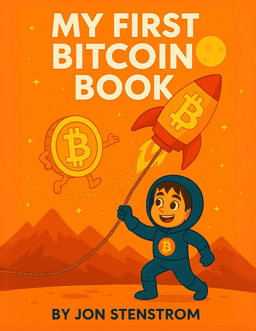
These activities fit directly into the “Thursday: Do” slot in our full financial literacy curriculum. For a complete A-Z introduction to money and Bitcoin concepts, My First Bitcoin Book covers all 26 topics with illustrations kids actually enjoy.
How to handle common reactions
- If they get frustrated about not having enough beans: Good. That's the point. That frustration is the same feeling adults get when the paycheck doesn't stretch far enough. Now you're teaching empathy alongside economics.
- If they want to know where real money comes from: The government creates it. But here's the catch: when they create too much, each dollar gets weaker. That's why a candy bar costs $2 instead of 25 cents. Bitcoin is different because nobody can make more of it. There will only ever be 21 million.3
- If they ask “Can we do this again?”: Yes. Absolutely. Repetition is how these concepts stick. Change the items, change the prices, change the rules. Same principles, fresh games. Research from NEFE confirms that repeated exposure to financial concepts through varied activities produces the strongest retention.4
Sources
- Consumer Financial Protection Bureau, Youth Financial Education Resources
- Jump$tart Coalition for Personal Financial Literacy, National Standards in K-12 Personal Finance Education
- Nakamoto, Satoshi. Bitcoin: A Peer-to-Peer Electronic Cash System (2008)
- National Endowment for Financial Education, Financial Education Research Projects
- Council for Economic Education, Survey of the States (2024)
- Next Gen Personal Finance, Free Financial Education Curriculum
This site is created by a Bitcoin advocate and parent. It presents one perspective on money and financial education. Nothing here is financial advice. Bitcoin is volatile and you can lose money. Consult a licensed financial advisor before making investment decisions for your family.
Keep reading
Teaching Kids About Saving vs. Spending
A hands-on lesson for teaching kids ages 6-9 the difference between saving and spending. Uses two jars, real coins, and a savings goal they pick themselves.
How to Teach Scarcity to Kids
A 15-minute hands-on activity that teaches kids ages 6-9 about scarcity using beans. Three rounds that build from simple buying to understanding inflation.
Financial Literacy Curriculum for Homeschool
A complete, age-sequenced financial literacy curriculum for homeschool families. Four units from money basics to budgeting, with hands-on activities and a weekly schedule.
Give your kids the language behind your family treasury
My First Bitcoin Book introduces 26 Bitcoin concepts with fun illustrations, designed for ages 3-8.
Get the Book